
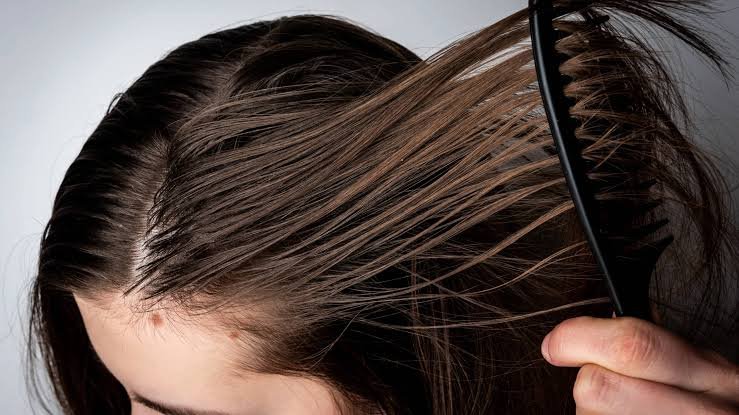
Hair care routine for oily scalp and dry ends is not about choosing between cleansing or conditioning; rather, it is about creating harmony between two opposite needs. In reality, this hair type is far more common than people realize. Therefore, instead of using the same products everywhere, a targeted and intelligent routine becomes absolutely essential.
Moreover, when scalp oil is controlled and hair lengths are hydrated simultaneously, hair starts behaving better overall. Consequently, roots stay fresh, ends feel softer, and styling becomes noticeably easier.
Why Oily Scalp and Dry Ends Happen Together
To begin with, sebaceous glands on the scalp produce oil to protect the skin. However, when oil production increases excessively, the scalp turns greasy very quickly. At the same time, this natural oil often fails to reach the ends, especially in longer or heat-styled hair. As a result, the scalp becomes oily while the ends remain dry and fragile.
Additionally, the following factors further worsen this imbalance:
- Overwashing with harsh shampoos
- Frequent heat styling
- Environmental damage and pollution
- Lack of targeted conditioning
According to dermatology experts, treating the scalp and hair lengths separately is the most effective approach.
Step-by-Step Hair Care Routine for Oily Scalp and Dry Ends
1. Pre-Wash Care That Protects the Ends
First and foremost, pre-wash care should focus on protecting dry ends, not oiling the scalp. While heavy scalp oiling can worsen greasiness, nourishing the ends before shampooing prevents moisture loss. Consequently, hair lengths feel smoother after washing.
- Apply argan or jojoba oil to ends only
- Use aloe vera gel lightly on scalp if itchy
Interestingly, aloe vera helps soothe the scalp without increasing oil: Healthline – Aloe Vera for Hair
2. Use a Balancing Shampoo Correctly
Secondly, shampoo selection plays a decisive role in any hair care routine for oily scalp and dry ends. Therefore, always choose a balancing or oily-scalp shampoo that cleanses effectively without stripping moisture from the lengths.
Key ingredients to prioritize:
- Salicylic acid – removes excess scalp oil
- Niacinamide – regulates sebum production
- Glycerin – prevents hair dryness
- Panthenol – improves hair elasticity
Product examples:
Moreover, apply shampoo only to the scalp and allow the lather to gently cleanse the ends. This technique alone significantly reduces dryness.
3. Condition Strategically for Dry Ends
Next, conditioner becomes non-negotiable for dry ends. However, it must be applied with precision. Instead of applying it everywhere, focus only on mid-lengths and ends. As a result, moisture is locked in without weighing down the roots.
4. Weekly Scalp Exfoliation + Length Masking
Furthermore, treating scalp and lengths differently on a weekly basis is crucial. While the scalp benefits from exfoliation, the ends require deep nourishment. Consequently, this dual approach restores balance more effectively.
Product examples:
Scalp exfoliation benefits explained here: Healthline – Scalp Exfoliation Benefits
5. Smart Leave-In Care Without Grease
Additionally, leave-in products should hydrate dry ends while keeping the scalp untouched. Therefore, always apply leave-in serums below ear level. Over time, this prevents split ends and improves shine.
6. Drying, Styling & Everyday Habits
Equally important, daily habits strongly influence this hair type. Excessive heat worsens dry ends, whereas touching roots increases oiliness. Hence, mindful styling is essential.
- Air-dry whenever possible
- Always use a heat protectant
- Trim ends every 6-8 weeks
Common Mistakes That Worsen the Imbalance
Despite good intentions, these mistakes often delay results. Therefore, avoiding them is critical:
- Using the same product on scalp and ends
- Skipping conditioner due to oily roots
- Overwashing hair
- Applying oils directly on the scalp
Diet & Lifestyle Support for Better Results
Interestingly, internal health plays a major role in scalp oil and hair dryness. Therefore, lifestyle support enhances the effectiveness of your routine.
- Increase protein intake
- Consume omega-3 rich foods
- Stay well hydrated
- Manage stress and sleep adequately
Nutrition and hair health explained here: Healthline – Foods for Hair Health
How Soon Will You See Results?
Generally speaking, a consistent hair care routine for oily scalp and dry ends starts showing visible improvement within 3-4 weeks. Gradually, scalp oil normalizes, ends retain moisture, and overall hair texture improves.
FAQs: Hair Care Routine for Oily Scalp and Dry Ends
Can oily scalp and dry ends cause hair fall?
Yes, imbalance can weaken hair strands and cause breakage.
Is oiling necessary for dry ends?
Yes, but oil should be applied only to the ends.
Is dry shampoo safe?
Occasional use is fine; excessive use may worsen dryness.
Final Verdict
In conclusion, a successful hair care routine for oily scalp and dry ends is built on balance, precision, and consistency. By cleansing the scalp gently while nourishing the ends intentionally, you can achieve fresher roots, softer lengths, and healthier hair without compromise.